Architectural Lighting Trends in Saudi Arabia for 2026
When the sun goes down over Saudi Arabia, the architecture doesn't disappear. It starts over, basically - a second life.
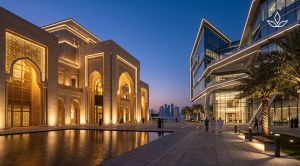
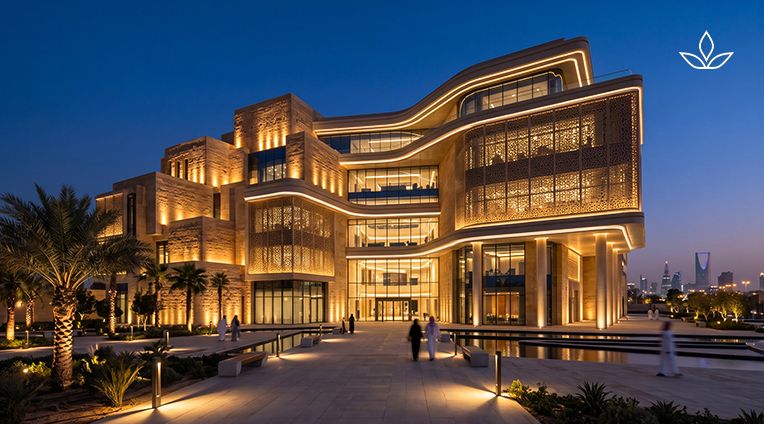
Across the Kingdom, buildings, landscapes, public spaces, cultural sites - all of it's becoming part of a nighttime canvas that keeps evolving. Stone facades pick up textures they never showed in daylight. Geometric patterns turn into shadow. Landscapes become something you'd almost call an experience rather than just scenery. Carefully aimed light turns architecture into something you can keep experiencing well after the sun's gone.
That's the new language of architectural lighting in Saudi Arabia, really.
Vision 2030 is pushing destinations, hospitality projects, entertainment districts, and public spaces forward fast, and lighting's shifted with it - no longer a finishing touch, now a real part of how architecture gets designed in the first place. The question isn't "how do we light this space" anymore. It's "how should this space actually come alive once it's dark out?"
So - what's actually going to define architectural lighting trends in Saudi Arabia through 2026?
1. Heritage Reimagined Through Light
One of the more distinctive directions right now: reinterpreting heritage through modern lighting.
Najdi geometry, Sadu-inspired patterns, the flowing lines of the desert itself - all of it can feed into modern lighting compositions. Not decoration exactly. Light, done right, reveals a building's cultural character through shadow, contrast, small luminous details that catch your eye without shouting for attention. Dynamic facades push this further - patterns and controlled illumination that actually shift the visual character of a building as the evening goes on.
What you get is a stronger sense of place, and contemporary architecture that still feels tied to Saudi identity. Heading into 2026, cultural storytelling through light is becoming something architects, designers, and developers genuinely have to think about - not a nice-to-have.
2. Designing Architecture for the Night
Tourism, entertainment, culture - all three sectors in Saudi Arabia are expanding fast, and all three care a lot more about what happens after sunset now.
As destinations get busier at night, architectural lighting design in Saudi Arabia is being brought in much earlier in the process. Instead of tacking lighting on at the end, designers are building it into the architecture, the landscape, the public realm - right from day one.
Facades, promenades, plazas, pathways, landscapes - all of it can be shaped specifically around how it interacts with light. End result: architecture with an actual nighttime identity of its own - helping people find their way while also creating something worth remembering. For Saudi Arabia's growing night-time economy, the right lighting turns an ordinary space into something closer to an experience.
3. Smart and Connected Lighting Systems
Technology's become another big piece of what's defining Saudi architectural lighting heading into 2026.
Smart LED systems, automated controls, sensors, remote monitoring, adaptive lighting - all of it's making lighting environments more responsive, more efficient than they used to be. Rather than running at one fixed level all night, connected systems can respond to changing conditions, programmed scenes, whatever the operation actually needs. For bigger developments, centralized control and monitoring also gives a much clearer picture of system performance, energy use, and what maintenance is actually needed. As Saudi Arabia builds increasingly connected cities, smart lighting's shaping up to be a real part of how architecture, technology, and public space all relate to each other.
4. Sustainability Meets Performance
Energy efficiency and environmental responsibility are shaping where architectural lighting in Saudi Arabia goes next, too.
LED technology, intelligent controls, precise optics, durable construction - all of it helps cut unnecessary energy use without sacrificing quality light.
Sustainable lighting isn't just about swapping in efficient light sources, though. Good design also asks where light's actually needed, how much, when it should run, and how tightly it's controlled. Outdoors, reliability matters just as much. Saudi Arabia's climate is demanding - thermal performance, weather resistance, glare control, ingress protection, long-term durability all become real considerations once you're specifying architectural and landscape lighting for it. So the focus keeps shifting toward systems that combine efficiency with performance that actually holds up over years, not just on day one.
5. Lighting Integrated Into Architecture
Another big trend for 2026: lighting that all but disappears into the architecture itself.
Recessed luminaires, concealed linear sources, integrated façade lighting, precisely placed accent light - all of it lets designers put the architectural form front and center, not the fixtures doing the lighting.
The result reads cleaner, more sophisticated. Light emerges from beneath elements, follows structural lines, reveals texture, or quietly defines a landscape feature - without ever becoming the main event itself. In premium hospitality, residential, landscape, and public-realm work, this lets the architecture stay the hero while the lighting does its job quietly in the background.
The Future of Architectural Lighting in Saudi Arabia
Put it all together, and architectural lighting trends in Saudi Arabia for 2026 point toward a market that's genuinely thinking harder about how architecture and light actually relate. Technology's getting smarter. Sustainability matters more. Heritage is finding new ways to show up. And nighttime design is becoming a real part of how places get experienced, not an afterthought. In all of this, the future of architectural lighting isn't really about making buildings brighter.
It's about giving architecture a new identity once the sun's down.
For projects that need precision, durability, and genuinely sophisticated exterior lighting, LUMASCAPE brings decades of experience across architectural, landscape, and underwater lighting. Founded in Australia in 1991, LUMASCAPE combines advanced technology, rigorous testing, and design-led thinking to build lighting solutions for complex environments worldwide. As Saudi Arabia keeps shaping the cities and destinations of tomorrow, lighting's role keeps growing too - not just illuminating these spaces, but actually defining how they are experienced, remembered, and connected to everything around them.